
Disney Starlight Parade Royal Float Trellises
Transforming decorative concept geometry into production-ready structural assemblies for Disney's Royal Princess float through CAD engineering, CNC tube bending, precision fabrication, and certified welding.
- Client
- Disney
- Project
- Starlight Parade — Royal Float
- Role
- Technical Design · CAD · Manufacturing Engineering · CNC Tube Programming · Fabrication
- Material
- 2" OD × .375" wall steel tube
- Manufacturing
- Nissin CNC tube bender
- Deliverables
- CAD reconstruction · RTP programs · Fixtures · DXFs · Weld maps · Material takeoffs · Production support
- Responsibility
- End-to-end manufacturing ownership
Project Overview
As part of Disney's Starlight nighttime parade, our team was contracted to manufacture the structural trellis assemblies that frame the Royal Princess float. These large illuminated steel structures serve as one of the defining visual elements of the float, supporting decorative components while meeting strict structural and transportation requirements.
Although inspired by elegant decorative scrollwork, the assemblies are heavy-duty welded steel fabrications engineered to survive transportation, installation and daily parade operation. Every weld, support plate, bend and assembly was subject to rigorous quality standards before shipment to Disney.
Quality Control
The structural welds were subject to certified inspection requirements, including X-ray quality verification. To support that process I recreated the weld mapping documentation used throughout fabrication, identifying weld locations and providing traceability for inspection records and certifications. Maintaining accurate weld documentation was just as important as maintaining dimensional accuracy — every structural connection could be verified before shipment.
My Technical Role
I was responsible for taking this project from incomplete design data to production-ready fabricated assemblies. The supplied CAD geometry contained spline information that was visually accurate but could not be manufactured directly — my first responsibility was rebuilding and refining that geometry into bendable tube paths while preserving the original design intent. From there I developed the complete manufacturing workflow.
- Rebuilding spline geometry for manufacturable bends
- Creating bend-ready RTP programs for the Nissin CNC tube bender
- Determining realistic bend locations based on tooling limitations
- Designing proposed weld segmentation for fabrication
- Creating manufacturing fixtures and floor layouts directly from CAD
- Generating DXF files for laser-cut support plates
- Performing material takeoffs
- Supervising fabrication from first bend through final shipment
Engineering Challenges
The trellises were fabricated from 2-inch OD steel tubing with a 0.375-inch wall thickness, reinforced by ½-inch internal support plates positioned between the tube runners according to the structural drawings. Because of the wall thickness and overall size, bending accuracy was critical — every bend affected every downstream assembly. Each component had to match the original CAD geometry, remain manufacturable on the Nissin bender, stay fixture-friendly for welding, meet structural drawing requirements and remain within shipping size limitations. Balancing those requirements required continual coordination between design, manufacturing and fabrication rather than treating each as separate processes.
Outcome
From receiving incomplete spline data to delivering finished production assemblies, I managed the technical workflow for the trellis fabrication process. The completed assemblies became the defining architectural elements of Disney's Royal float, successfully combining decorative design with heavy structural fabrication while meeting demanding manufacturing, quality and transportation requirements.
Technical Highlights
- Fabricated from 2" OD steel tube with a .375" wall, reinforced by ½" internal support plates set between tube runners per the structural drawings.
- Supplied CAD carried spline geometry that was visually accurate but not manufacturable — rebuilt into bendable tube paths that preserved the original design intent.
- Bend-ready RTP programs authored for the Nissin CNC tube bender, with bend locations chosen around real tooling limitations.
- Proposed weld segmentation developed so large assemblies stayed fixture-friendly and within shipping size limits.
- Welding fixtures and shop floor layouts generated directly from CAD; DXF files released for laser-cut support plates.
- Wall thickness and overall scale made bend accuracy critical — every bend propagated into every downstream assembly.
- Structural welds held to certified inspection requirements including X-ray quality verification.
- Weld mapping documentation recreated for the full build, identifying weld locations and providing traceability for inspection records and certifications.
- Material takeoffs, first-bend through final-shipment supervision, and continual coordination between design, manufacturing and fabrication.
Process Galleries
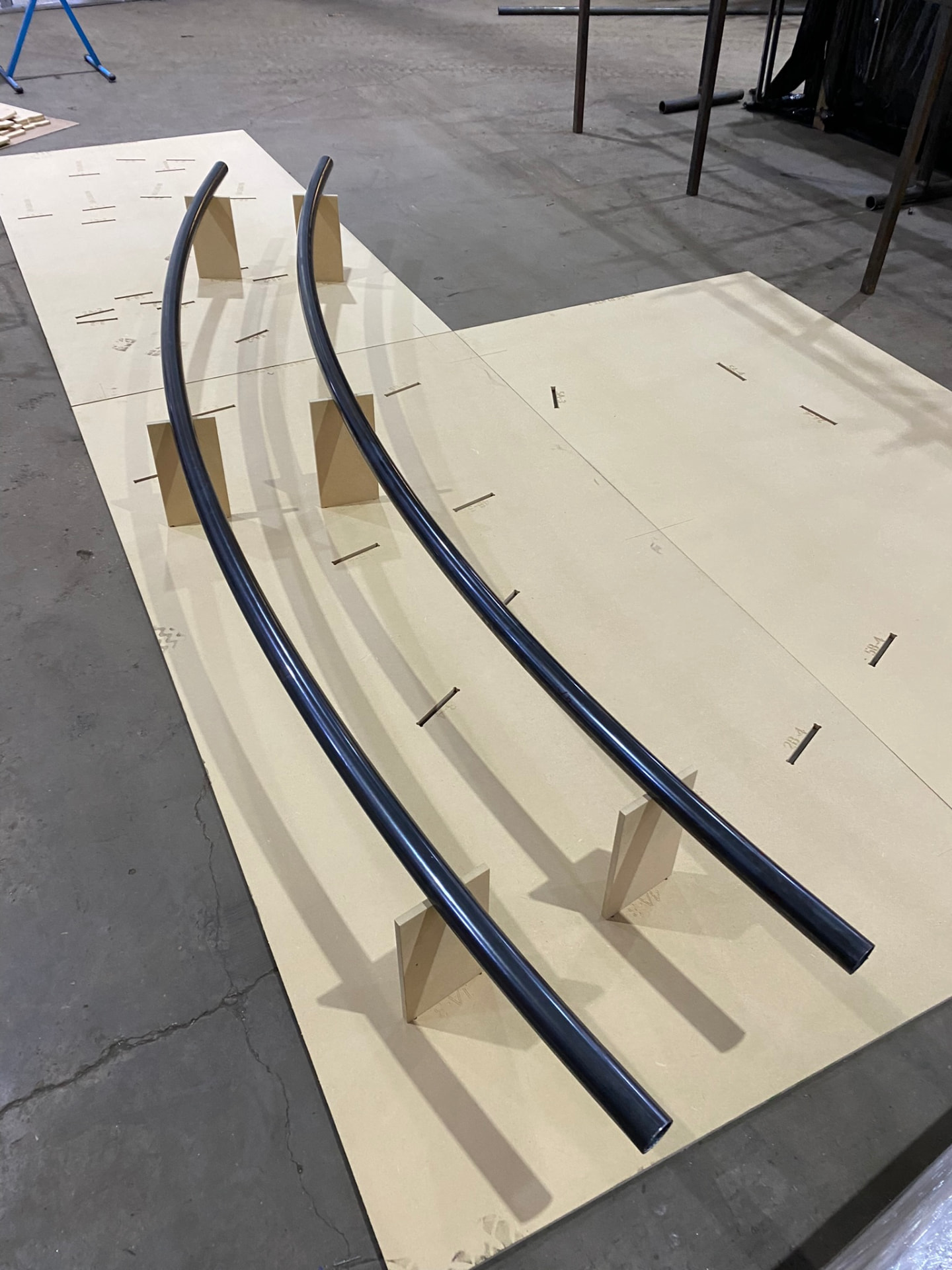
Fabrication
Shop work behind the Royal float trellises — CNC tube bending, CAD-driven floor layouts, fixturing and welded assembly.
View gallery →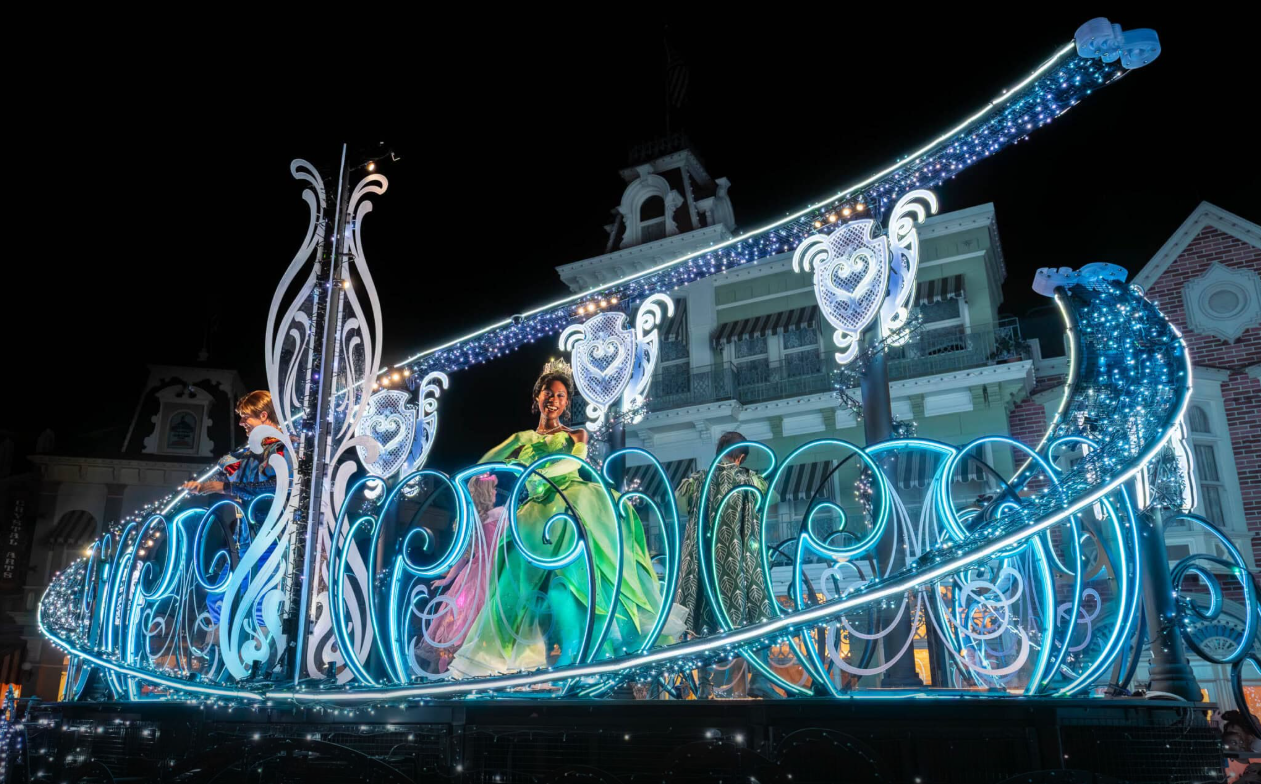
Finish Photos
The completed trellis assemblies on the Royal float, fully illuminated on the Starlight Parade route.
View gallery →